Overview
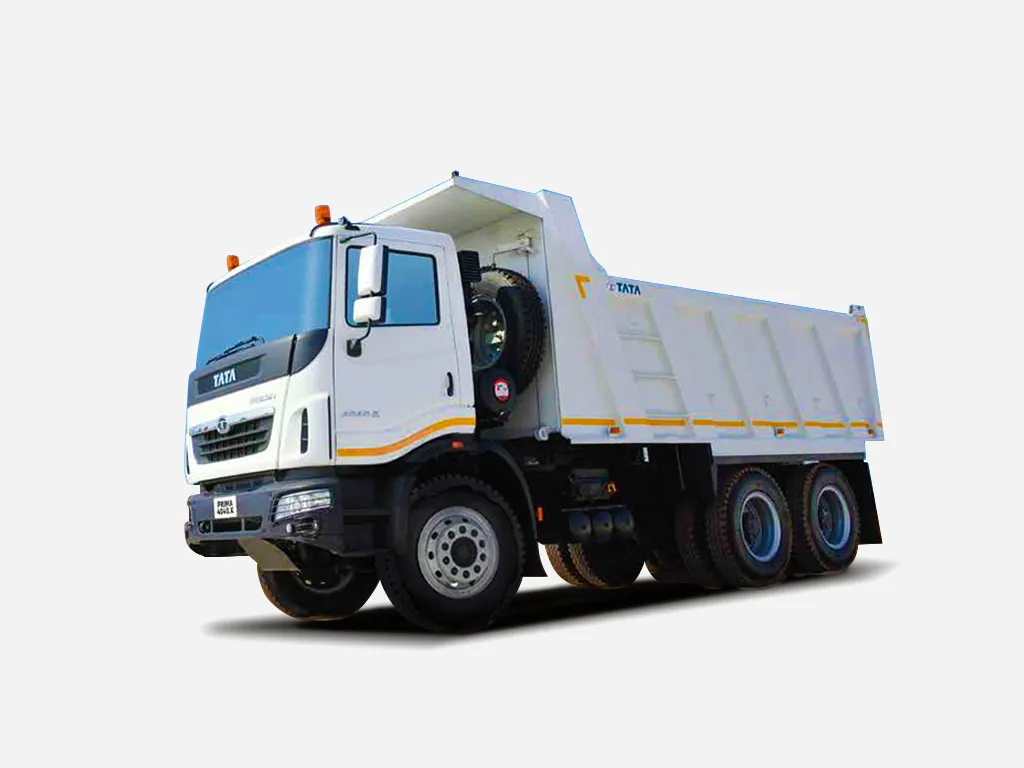
The Tata Prima 4040.K is a heavy-duty tipper truck built for mining, construction, and bulk material handling operations. It is positioned as a purpose-built site vehicle rather than a highway truck, designed for continuous raw material transport between extraction points and production sites where turnaround frequency and load reliability matter more than top speed or long-distance fuel efficiency. It is commonly deployed on infrastructure projects, open-cast mines, quarries, and large-scale construction sites across India where daily cycle counts are high and vehicle downtime has a direct impact on site productivity.
The Prima 4040.K is powered by a Cummins ISLe 400 water-cooled, direct injection, turbocharged diesel engine producing 400 HP at 2,100 rpm and 1,700 Nm of torque at 1,300–1,400 rpm. It is paired with a ZF 16S 1935 TD LHD GEN 4 transmission with PTO capability. The Cummins ISLe 400 is a purpose-configured engine for heavy site work — it is not the same unit as the highway-oriented ISBe found in long-haul tractors, and is specifically calibrated for the low-speed, high-torque demand cycle of mining and quarry operations. At 1,700 Nm delivered at 1,300–1,400 rpm, the engine produces its maximum pulling force well within the working rev range, meaning the truck does not need to be pushed hard to achieve full torque output — a critical characteristic for loaded pit exits, quarry ramps, and loose-surface gradient climbs where engine laboring accelerates wear. The ZF 16-speed gearbox provides fine-grained ratio selection across a wide speed range, allowing the driver to stay in the optimal gear for both loaded climbs and unloaded return runs. The PTO capability enables the transmission to directly power the hydraulic tipping system without requiring a separate power unit, simplifying the drivetrain architecture and reducing auxiliary system maintenance points.
GVW is 40,000 kg with a payload capacity of approximately 25,000–28,000 kg depending on body configuration. The truck runs on 10 tyres. A 25–28 tonne payload in a 10-tyre configuration is appropriate for the load bearing demands of mining and construction cycles, where axle load limits and tyre stress under repeated loading are primary considerations for maintenance planning. The tipper body is available in different configurations — steel body for hard rock and aggregate applications, and fabricated body options for softer material and construction debris. Body selection should match the material type being transported, as mismatched body specification accelerates wear on floor plates and side panels under high-cycle operation. The 10-tyre layout distributes GVW more evenly than an 8-tyre configuration, reducing per-tyre load and extending tyre life on abrasive site surfaces.
Front suspension uses parabolic leaf springs. Rear suspension is a two spring balance beam bogie with semi-elliptic multi rubber mounted torque rods and V-rod. Braking is handled by full air dual-circuit S-cam brakes with ABS, plus an engine exhaust brake as auxiliary. The parabolic front springs provide adequate ride comfort and steering response for site speeds, where road irregularities are significant but vehicle velocity is low compared to highway operation. The bogie rear suspension is the key structural feature for site use — it distributes load evenly across both rear axles during the loading and tipping cycle, reducing chassis stress and tyre wear under repeated heavy loading that would fatigue a standard single rear axle setup. Rubber-mounted torque rods dampen driveline vibration, protecting the rear axle assembly from shock loads during tipping and over rough ground. The V-rod provides lateral stability under side-loaded conditions on uneven site surfaces. ABS on a 40-tonne tipper is a meaningful safety addition — on loose quarry surfaces and wet construction sites, uncontrolled wheel lockup during braking can cause directional instability. The engine exhaust brake reduces reliance on friction brakes during loaded downhill sections on mine pit exits and quarry ramps — without it, repeated heavy braking on descents generates heat that degrades brake performance and accelerates pad and drum replacement intervals.
Fuel tank capacity is 365 litres. For a truck operating in closed-loop mining or construction site cycles — typically covering 20–50 km per shift in repeated short runs — 365 litres comfortably covers a full 10–12 hour working day without interruption. Unlike highway trucks where tank range is measured in corridor distance, site vehicles are evaluated on shift coverage, and 365 litres performs well on that metric across most standard operational profiles. Refuelling can be scheduled during shift changeovers, keeping the vehicle in continuous productive use.
The cabin includes an HVAC air conditioning system as standard, with D+2 seating configuration and a top speed of 95 km/h. AC as standard is operationally relevant for site work in high-temperature regions — open-cast mines and construction sites in central, western, and southern India regularly see ambient temperatures above 40°C, and driver alertness over a full shift is directly affected by cabin temperature. The D+2 seating accommodates a driver and two crew members, which is standard for site operations where a supervisor or additional operative travels with the vehicle. Top speed of 95 km/h is adequate for inter-site transit and approach road movement, though the 4040.K is not designed for sustained highway running and should not be evaluated on that basis. The cabin is hydraulically tiltable for engine access, which reduces maintenance turnaround time during scheduled service intervals on active sites.
Ex-showroom price ranges from approximately ₹40 lakh to ₹50 lakh depending on configuration and region. Primary applications include mining, quarrying, infrastructure construction, and bulk material transport. On-road pricing including registration, road tax, and insurance typically adds ₹4–6 lakh to the ex-showroom figure, with variation depending on state and registration category. Total Cost of Ownership evaluation for a tipper truck differs from a highway tractor — tyre replacement, body wear, and hydraulic system maintenance are the primary running cost variables, and these are heavily influenced by site conditions and material type. Tata Motors’ service network and parts availability for the Cummins ISLe engine are strong across major mining and infrastructure regions including Jharkhand, Odisha, Chhattisgarh, Rajasthan, and Maharashtra, which reduces breakdown recovery time in the regions where the 4040.K is most commonly deployed.
Available Body Types
Tata Prima 4040.K Tipper Variants & Price
| Variant Name | Ex-Showroom Price | Action |
|---|---|---|
|
Tata Prima 4040.K Tipper Tata Prima 4040.K
|
₹3,260,000 |
Get On-Road Price |
Technical Specifications
| Engine Model | Cummins 8.9L 400 HP |
| Displacement | 8900 cc |
| Max Power | 400 HP |
| Max Torque | 1700 Nm |
| No. of Cylinders | 6 |
| Emission Norm | E-V |
| Mileage | 2.5-3.5 kmpl |
| Fuel Tank Capacity | 365 L |
| Gross Vehicle Weight (GVW) | 40000 kg |
| Payload Capacity | 28000 kg |
| Kerb Weight | 10200 kg |
| Gradeability | 40%(1st), 65% (Crawler) |
| Max Speed | 95 km/h |
| Overall Length | 8038 mm |
| Overall Width | 2590 mm |
| Overall Height | 3219 mm |
| Wheelbase | 4570 mm |
| Turning Radius | 9175 mm |
| Transmission | 16-speed ZF 1935 TD manual with PTO |
| Clutch | 430mm dia pull type |
| Axle Configuration | 6x4 |
| Front Axle | Forged I-section reverse Elliot |
| Rear Axle | Fully floating single speed |
| Front Suspension | Parabolic leaf spring |
| Rear Suspension | Two spring balance beam Bogie with semi elliptic multi rubber Mounted Torque Rods & V-rod |
| Front Brake | Service Brake -Full Air Dual circuit |
| Rear Brake | Service Brake -Full Air Dual circuit |
| ABS | Yes |
| Front Tyre | 12R24 -18PR |
| Rear Tyre | 12R24 -18PR |
| No. of Tyres | 10 |
| Cabin Type | Day cabin (Prima Cabin) |
| Seating Capacity | 2 |
| Air Conditioning | Available |
| Power Steering | Tilt & Telescopic Steering System |
Tata Prima 4040.K Tipper Pros & Cons
- Pros
- 400 HP and 1,700 Nm built for sustained low-speed heavy-load cycles
- ZF 16-speed gearbox provides fine ratio control across site conditions
- PTO capability powers hydraulic tipping system directly from drivetrain
- Bogie rear suspension distributes load evenly across both rear axles
- Engine exhaust brake reduces friction brake wear on loaded descents
- ABS standard for stability on loose and wet site surfaces
- 365-litre tank covers full shift without mid-day refuelling
- Cummins ISLe engine well-serviced in major mining and infrastructure regions
- 95 km/h top speed adequate for inter-site and approach road transit
- Not designed for sustained highway operation or long-distance haulage
- Tyre and body wear accelerates significantly on abrasive mining surfaces
- Hydraulic tipping system requires scheduled maintenance to prevent failure
- Heavier GVW limits access on soft or waterlogged site terrain
- Fuel efficiency inadequate for any high-cycle site operation
The Tata Prima 4040.K is a purpose-built mining and construction tipper that prioritises cycle efficiency and durability over highway versatility — and within that scope, it delivers consistently. The Cummins ISLe 400 engine is well-suited to the demands of repeated heavy loading, and 1,700 Nm of torque at relatively low rpm means the truck pulls cleanly out of loaded pit exits and quarry ramps without straining the drivetrain. The ZF 16-speed gearbox with PTO is a practical inclusion for site operations where the transmission needs to power hydraulic tipping equipment directly. The bogie rear suspension handles the punishment of continuous heavy cycles better than a standard leaf spring setup, and the exhaust brake reduces friction brake wear on downhill loaded runs — both of which matter when the truck is running 10–12 hour shifts daily.
EMI Calculator
Calculate Your Monthly EMI
Total Cost of Ownership (TCO)
Calculate 5-Year Operating Cost
Compare Tata Prima 4040.K Tipper With
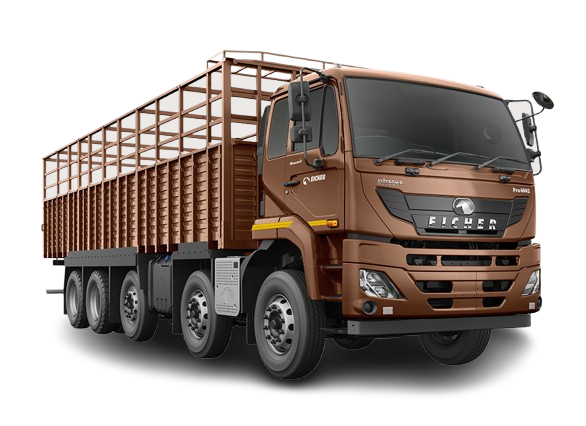
Key Specifications Comparison
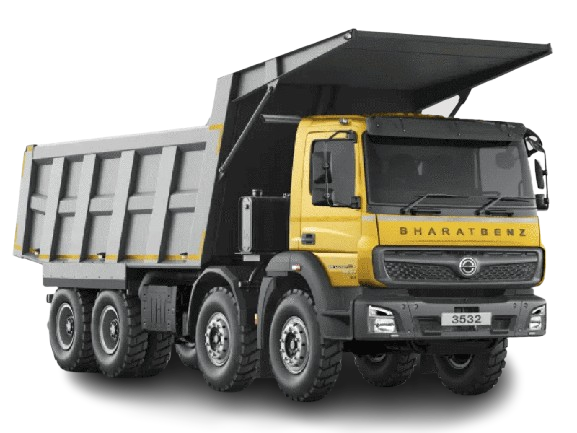
| Specification | Tata Prima 4040.K Tipper | BharatBenz 3532CM TORQSHIFT | Eicher Pro 6042 |
|---|---|---|---|
| Price | ₹3,260,000 | ₹6,785,000 | ₹4,281,000 |
| GVW | 40000 kg | 35000 kg | 42000 kg |
| Payload | 28000 kg | 24500 kg | 30000 kg |
| Engine | 8900 cc | 7200 cc | 7500 cc |
| Power | 400 HP | 320 HP | 250 HP @ 2400 rpm |
| Torque | 1700 Nm | 1250 Nm | 900 Nm @ 1200-1800 rpm |
| Mileage | 2.5-3.5 kmpl | 3.5-4.5 kmpl | 3.5-4.5 kmpl |
| Wheelbase | 4570 mm | 5175 mm | N/A |
| Fuel Tank | 365 L | 330 L / 310 L | 350 Litres |
Frequently Asked Questions
What is the GVW of the Tata Prima 4040.K Tipper?
The Tata Prima 4040.K Tipper has a Gross Vehicle Weight of 40,000 kg with a payload capacity of 25,000–28,000 kg depending on body configuration.
What engine powers the Tata Prima 4040.K?
The Prima 4040.K Tipper runs on a Cummins ISLe 400 turbocharged diesel engine producing 400 HP and 1,700 Nm of torque.
What gearbox does the 4040.K Tipper use?
The Prima Tipper comes with a ZF 16-speed gearbox with PTO capability, which allows it to directly power the hydraulic tipping system.
What type of suspension does the Tata Prima 4040.K have?
The Tata Prima 4040.K Tipper uses parabolic leaf springs at the front and a two spring balance beam bogie suspension at the rear for even load distribution across both rear axles.
What braking systems does the Tata Prima 4040.K Tipper have?
The Tata Prima 4040.K Tipper is equipped with full air dual-circuit S-cam brakes with ABS, and an engine exhaust brake as an auxiliary system.
How many tyres does Tata Prima 4040.K run on?
It runs on 10 tyres suited to the load distribution demands of mining and construction operations.
What is the ex-showroom price of the Tata Prima 4040.K Tipper?
The Tata Prima 4040.K is priced between approximately ₹40 lakh and ₹50 lakh ex-showroom, varying by configuration and state.
Who is the Tata Prima 4040.K truck perfect for?
The Tata Prima 4040.K Tipper is built for mining, quarrying, infrastructure construction, and bulk material transport in high-cycle site operations.